
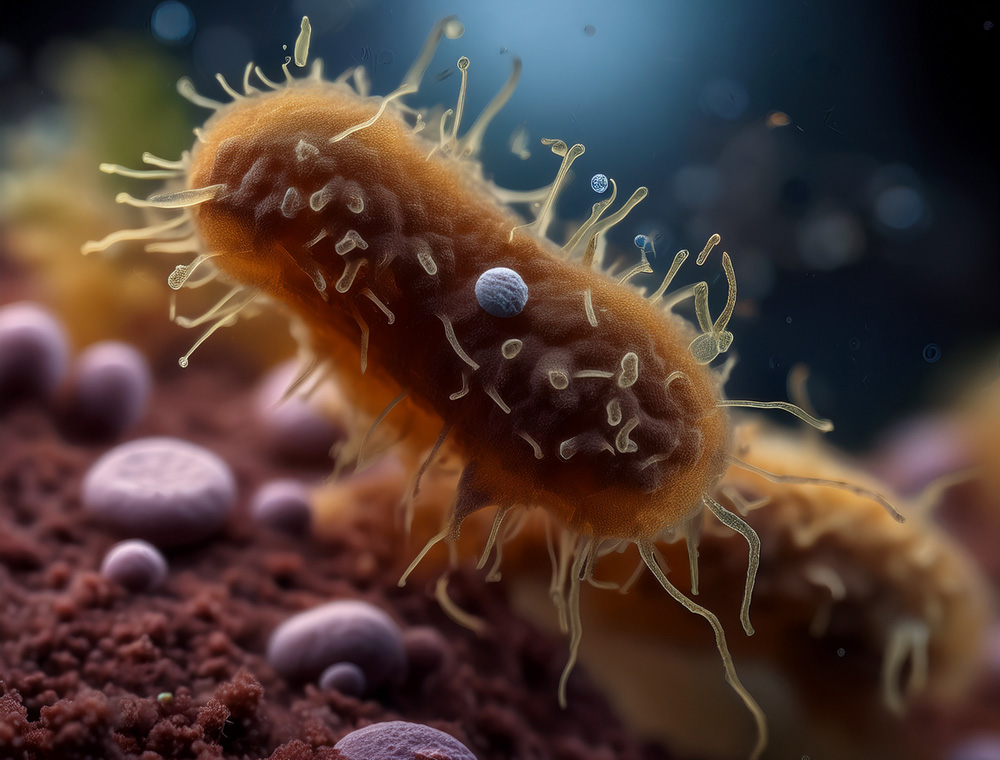

From Ancient Practices to Precision Microbial Applications
Modern agriculture is the result of thousands of years of biological innovation. From early seed selection to advanced genetics, biotechnology has continuously shaped how we grow food.
Today, agriculture is entering a new phase—one driven by microbial systems and precision biology.
Rather than relying solely on chemistry, growers are increasingly leveraging soil microbes to improve nutrient efficiency, plant health, and overall crop performance.
The Evolution of Biotechnology in Agriculture
Defining Agriculture Biotech
Agricultural biotechnology (shortened to “ag biotech”) is a subset of applied science that focuses on techniques to enhance plants, livestock, and microorganisms. It involves manipulating biological systems (often at the genetic or molecular level) to improve crop yields, plant resistance to pests and diseases, plant nutrient uptake, or adaptability to environmental stresses like drought or salinity.
- The most modern ag biotech methods incorporate:
- Genetic improvement (breeding, GMOs, CRISPR)
- Microbial technologies (biofertilizers, biostimulants)
Modern ag biotech is shifting toward working with biological systems—not replacing them.
A Journey Through Time
Ancient Beginnings: The Dawn of Domestication
Our journey kicked off around 10,000 BCE, when our ancestors traded their nomadic ways for settled life. Farmers in Western Asia coaxed wild wheat into submission by picking the plumpest seeds to sow, while Mesoamerican farmers transformed wild grass into maize.
Early Agriculture (10,000+ years ago)
- Selective breeding of crops like wheat and maize
- Early use of microbial fermentation (bread, beer)
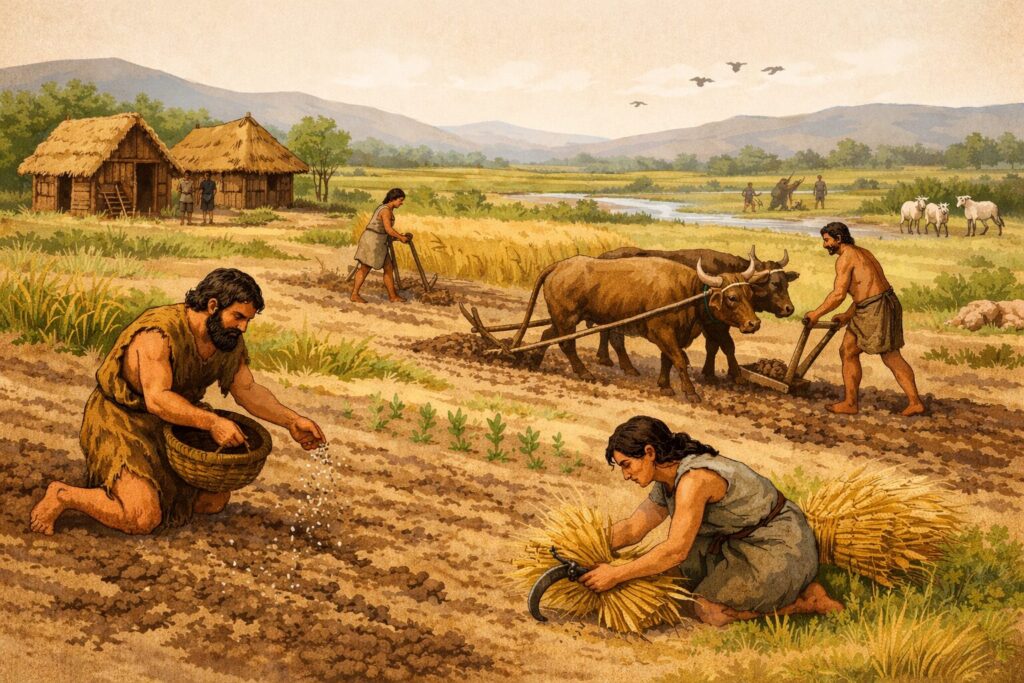
Neolithic farming (10,000+ years ago)
These early innovators were biotech trailblazers without knowing it—using plant trait selection to sculpt crops for their survival and success. By 6000 BCE, we cracked the next biotechnology breakthrough: the secret of fermentation — microbes turned grains into beer and dough into bread, proving that even then, tiny organisms were major league game changers.
19th Century: Laying the Foundations
Fast forward to the 19th century, when science began to engage the mysteries of ag biotech even further:
Foundations of Biology
- Gregor Mendel established the principles of genetic inheritance
- Louis Pasteur demonstrated the role of microbes in biological processes
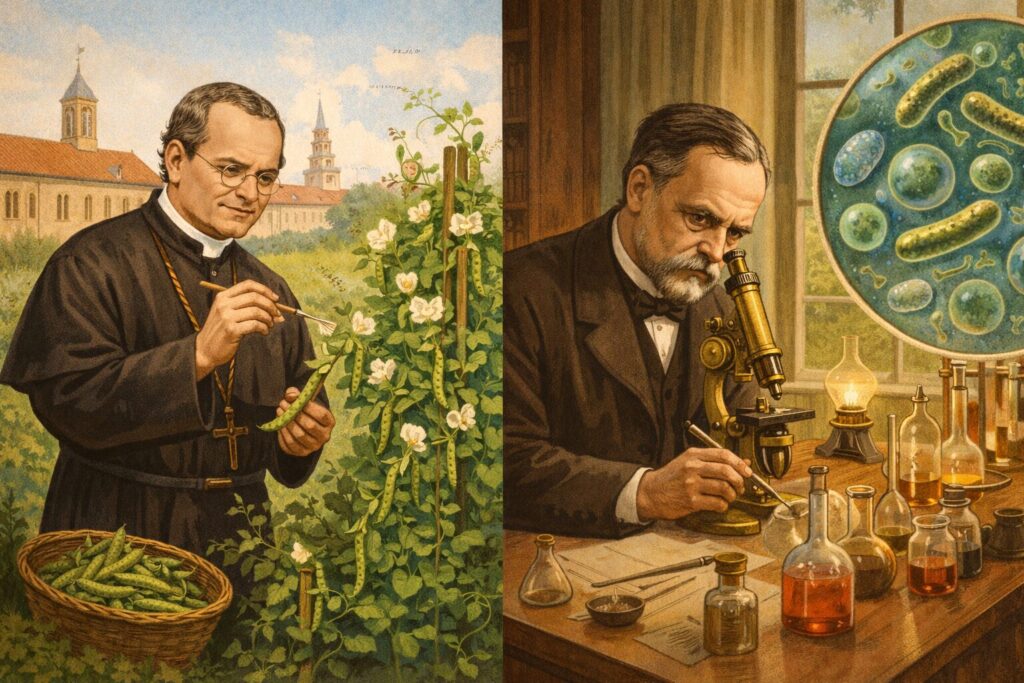
Pioneers of science: Mendel and Pasteur
Gregor Mendel unraveled the mysteries of plant heredity by observing pea plants — planting the seeds of modern genetics and laying the groundwork that would become a cornerstone of ag biotech. Meanwhile, Louis Pasteur, peering through his microscopes, was decoding how microbes drive fermentation and fend off disease.
These discoveries, like pasteurization, didn’t just save milk—they set the stage for showing us how to harness the power of these invisible microscopic allies for agriculture.
20th Century: The Green Revolution and Genetic Engineering
The 20th century marked a turning point for the first major biotech revolution — called “The Green Revolution”.
- High-yield crop varieties led by Norman Borlaug
- Synthetic fertilizers enabled by the Haber–Bosch process
- Rapid yield gains—often accompanied by reduced biological complexity
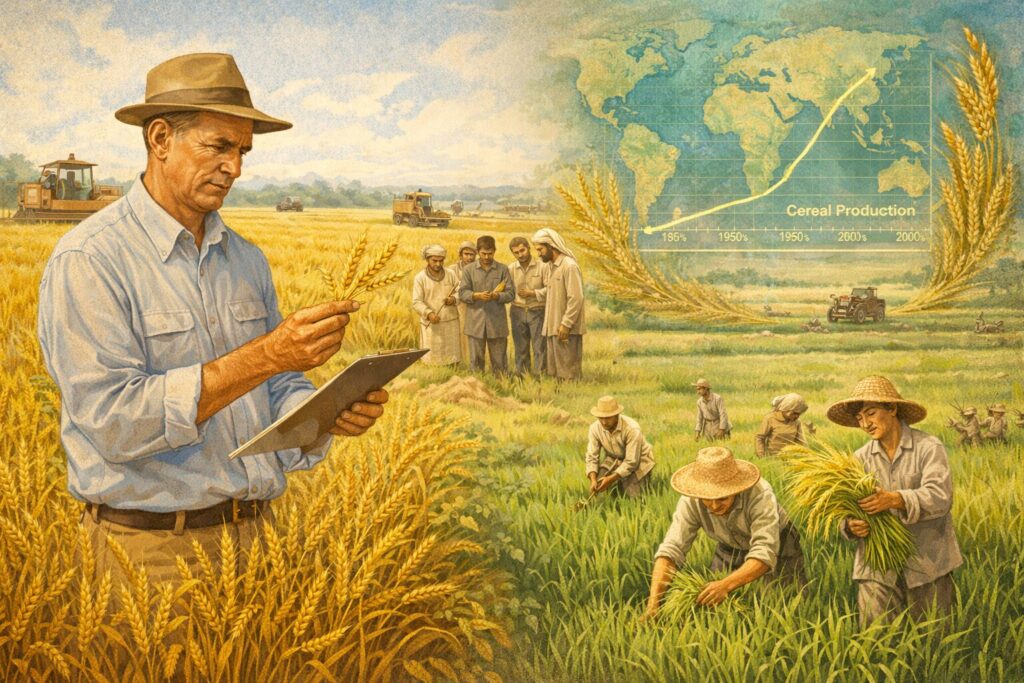
Advancing agriculture: The Green Revolution
The technical advances in synthetic chemistry were also on the rise during this time. The mass production of fertilizers and pesticides, born from breakthroughs like the Haber-Bosch process, also helped to supercharge yields during this era. Then came the big boom — genetic engineering.
21st Century: The Era of Precision
The 21st century is defined by innovation and precision. With the development of:
- Gene editing (CRISPR)
- Precision agriculture (data-driven inputs)
- Rapid growth of microbial products and microbiome science
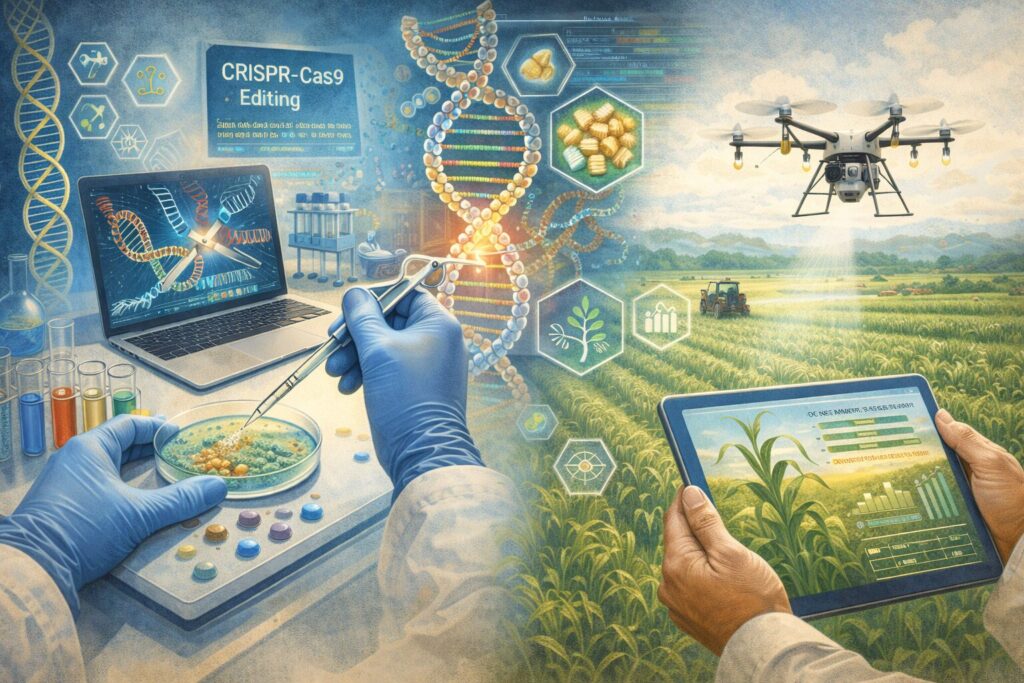
CRISPR-Cas9 technologies (2012), genomics and marker-assisted breeding now far exceeds the slower traditional plant breeding methodologies.
The 21st century now marks the era of the second “Green Revolution”. Farmers are harnessing the power of precision agriculture with functionally – targeted microbial inoculants to steer crops toward bumper harvests.
What is Precision Agriculture?
The purpose of precision is to maximize plant yields and crop quality while minimizing waste and inefficiency.
Precision agriculture delivers:
- The right input
- At the right time
- In the right place
The goal is to maximize:
- Yield
- Efficiency
- Resource use
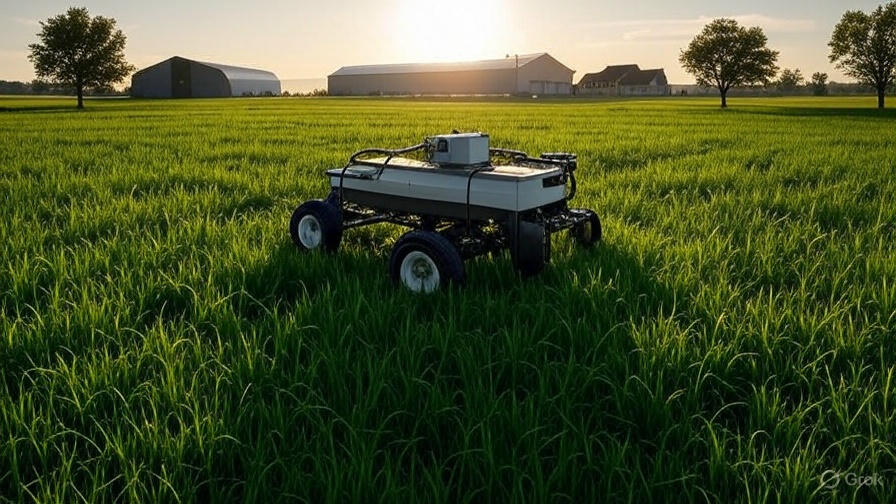
Precision agriculture pushes the limits of performance and efficiency
Increasingly, functionally targeted soil microbes are becoming a core component of precision systems, especially within the root zone.
Microbes: The Unsung Heroes of Precision Agriculture
Benefits of Microbial Biotechnology
Microbial applications (bacteria, fungi, and others) are now at the core of this cutting edge— the invisible link to supercharging plant growth.
Soil microbes play a central role in:
- Nutrient cycling (nitrogen, phosphorus, potassium)
- Root development
- Stress tolerance
- Disease suppression
Research consistently shows microbial communities influence:
- Nutrient availability and uptake efficiency
- Plant signaling and hormone regulation
- Soil structure and long-term fertility
How Microbes Support Plant Growth
1. Nutrient Mobilization
Microbes convert unavailable nutrients into plant-available forms:
- Phosphorus solubilization
- Nitrogen transformations
- Potassium mobilization
2. Root Development
Plant growth–promoting bacteria (PGPB):
- Produce auxins and signaling compounds
- Enhance root architecture
- Improve nutrient and water uptake
3. Plant Signaling and Hormonal Regulation
Microbes influence:
- Auxins
- Cytokinins
- Ethylene
These interactions help regulate plant growth, development, and efficiency.
4. Induced Systemic Resistance (ISR)
Microbes can activate plant defense systems through Induced Systemic Resistance (ISR).
This process involves:
- Microbial signaling compounds (e.g., lipopeptides, VOCs)
- Priming plant immune responses
Result:
- Increased resistance to pathogens
- Improved tolerance to environmental stress
Microbes and Crop Steering
More recent microbial innovations have focused on biofertilizer and pest control solutions that minimize agricultures inherent chemical dependencies. Ag biotech is currently at the forefront of expanding the boundaries of precision— by utilizing microscopic powerhouses into uber-sophisticated precision applications like crop steering tools.
Crop steering is a precision agriculture technique that manipulates environmental and nutritional conditions to guide plants with precision throughout their growth stages:
- Vegetative (growth)
- Generative (flowering and fruiting)
Microbes enhance this system by:
- Improving nutrient efficiency
- Supporting hormonal balance
- Increasing consistency of plant response
Rather than directly controlling growth, microbes optimize the biological systems that control growth.
Table1. Common microbial groups strategically utilizes to support crop steering:
| Key Function | Microbial Categories | Impact |
| Rooting phase | Bacilli – Glomeromycetes – Proteobacteria | 20-40% increases in root surface area |
| Vegetative phase | Alphaproteobacteria – Bacilli | 15-20% biomass increase – boost leaf and stem growth |
| Generative phase | Gammaproteobacteria – Sordariomycetes | 10-15% yield boost, support fruiting and flowering |
| Stress Conditions | Bacilli – Betaproteobacteria – Gammaproteobacteria | Prime plants for stress / quality response |
What the Research Shows
Microbial applications have been shown to:
- Improve nutrient uptake efficiency
- Enhance root development under specific conditions
- Support plant defense mechanisms
- Influence crop quality attributes
Early root-growth enhancements are being driven by auxin-producing plant growth-promoting bacterium (PGPB), that act like personal trainers for roots—pumping out phytohormones with precision.
Precision microbial applications during flowering can lead to increases in fruit density and quality, supporting higher yields by improving hormonal and nutrient balance, as well as introducing specific stress elicitors into the rhizosphere that trigger a myriad of plant quality responses.
Microbial elicitor molecules (siderophores, lipopeptides, and volatile organic compounds) exuded into the rhizosphere —priming plant defense mechanisms without requiring constant energy use — allowing plants to maximize energy on growth.
Overall Impact: Microbial benefits enhance rooting, vegetative, generative, and stress resilience phases by optimizing nutrient uptake and hormonal balance.
The Future of Agriculture: Biological + Precision Systems
Emerging trends include:
1. Microbial Inoculants
- Biofertilizers
- Biostimulants
- Biocontrol agents
2. Biopesticides
Example: Bacillus thuringiensis
- Widely used globally
- Reduces reliance on synthetic pesticides
3. Microbiome Engineering
- Designing targeted microbial consortia
- Enhancing specific plant functions
4. Data-Driven Biology
- Integration of sensors, AI, and microbial inputs
- Precision delivery of biological solutions
5. Climate-Resilient Agriculture
- Microbes supporting drought tolerance
- Improved soil carbon dynamics
- Enhanced system resilience
Table 2. Microbial use case trends and benefits.
| Trend | Description | Benefits |
| Drought-Resistant Crops | Biotech-developed crops thriving in arid conditions | Enhanced food production (arid regions) |
| Enhanced Soil Microbiomes | Enhancing plant health and performance | Improved fertility and productivity |
| Biopesticides and Biocontrol | Microbial-mediated pest and disease control | Lower chemical use and environmental impact |
| Precision Farming with Microbes | Integrating inoculants with AI and sensors | Optimized efficiency |
| Genetically Engineered Microbes | Nutrient fixation and stress tolerance | Enhanced sustainability, crop resilience |
The Takeaway
From ancient agriculture fields to today’s cutting-edge cultivation practices, ag biotech has always been about harnessing nature’s power to feed humanity.
Today, microbes are the stars of this saga, revolutionizing precision agriculture, enhancing nutrient uptake, protecting plants, and steering crops to new heights of productivity and sustainability.
Agriculture is evolving from chemistry-driven systems to biology-enabled, precision-managed systems.
Key insights:
- Soil microbes are central to plant performance
- Precision agriculture enhances how biology is applied
- Microbial technologies complement—not replace—synthetic systems
The future is not synthetic vs biological—it is integrated, precise, and microbially enhanced.
References
- Compant, S., et al. (2010). Use of plant growth-promoting bacteria for biocontrol. Annual Review of Microbiology, 64, 559–579.
- LaCanne, C. E., & Lundgren, J. G. (2018). Regenerative agriculture: Merging farming and natural resource conservation profitably. PeerJ, 6, e4428.
- Marschner, P. (2012). Marschner’s Mineral Nutrition of Higher Plants. Academic Press.
- O’Callaghan, M. (2022). Microbial inoculants: Reviewing the past, present, and future of their application in agriculture. Soil Use and Management, 38(2), 765-778.
- Paul, E. A. (2015). Soil Microbiology, Ecology and Biochemistry. Academic Press.




Leave a Reply